An AI agent that changes your plan when you get stuck
- What
- A personal project: a goal and task planner run by an AI agent
- Built
- During the CSRBOX Applied AI Internship (first version, January 2026), then audited and upgraded in September 2026
- Client
- None. This is my own project
The idea
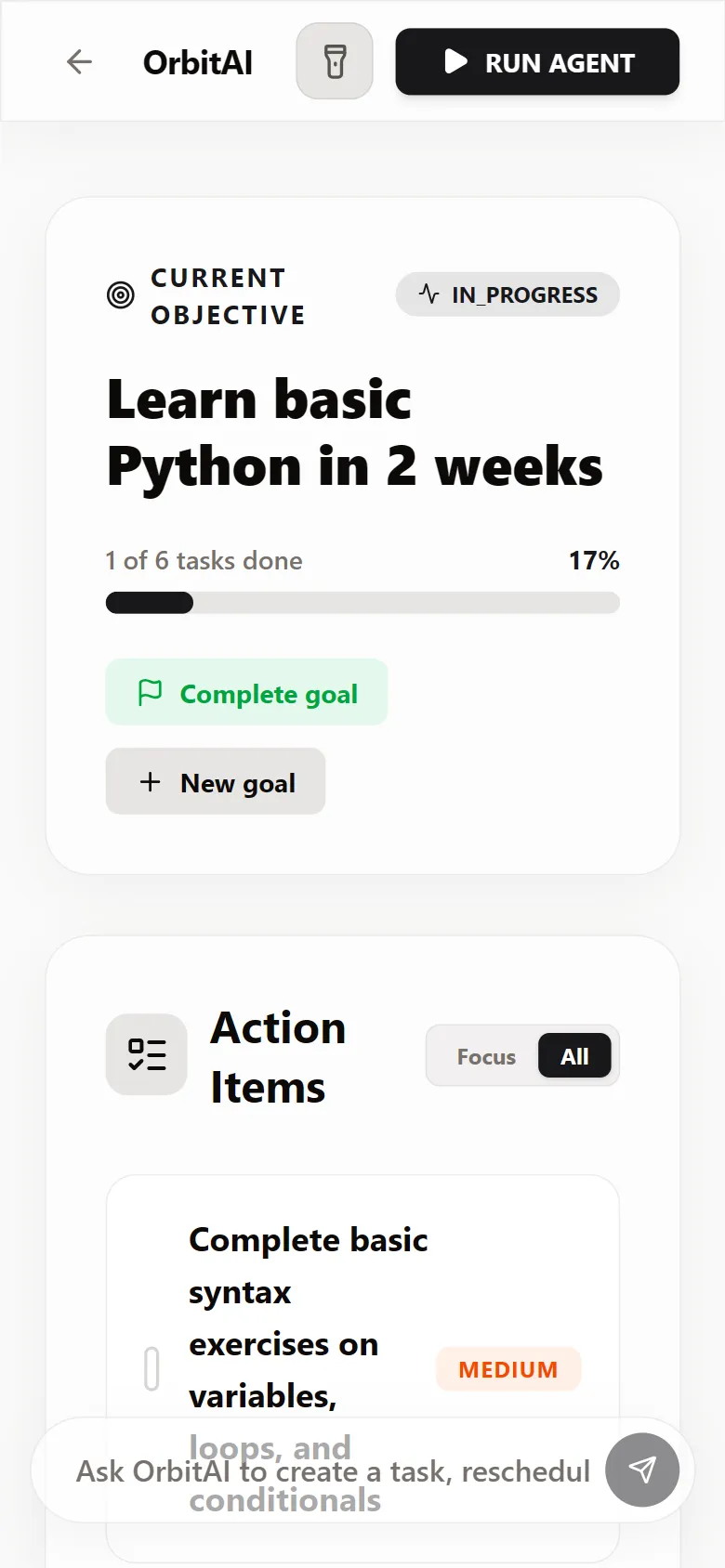
A normal to-do list doesn’t adapt. If a task is too hard today, the list just sits there. OrbitAI turns a goal into a plan of 3 to 7 tasks, and when you tell it “I can’t do this today”, it changes the plan.
What it does
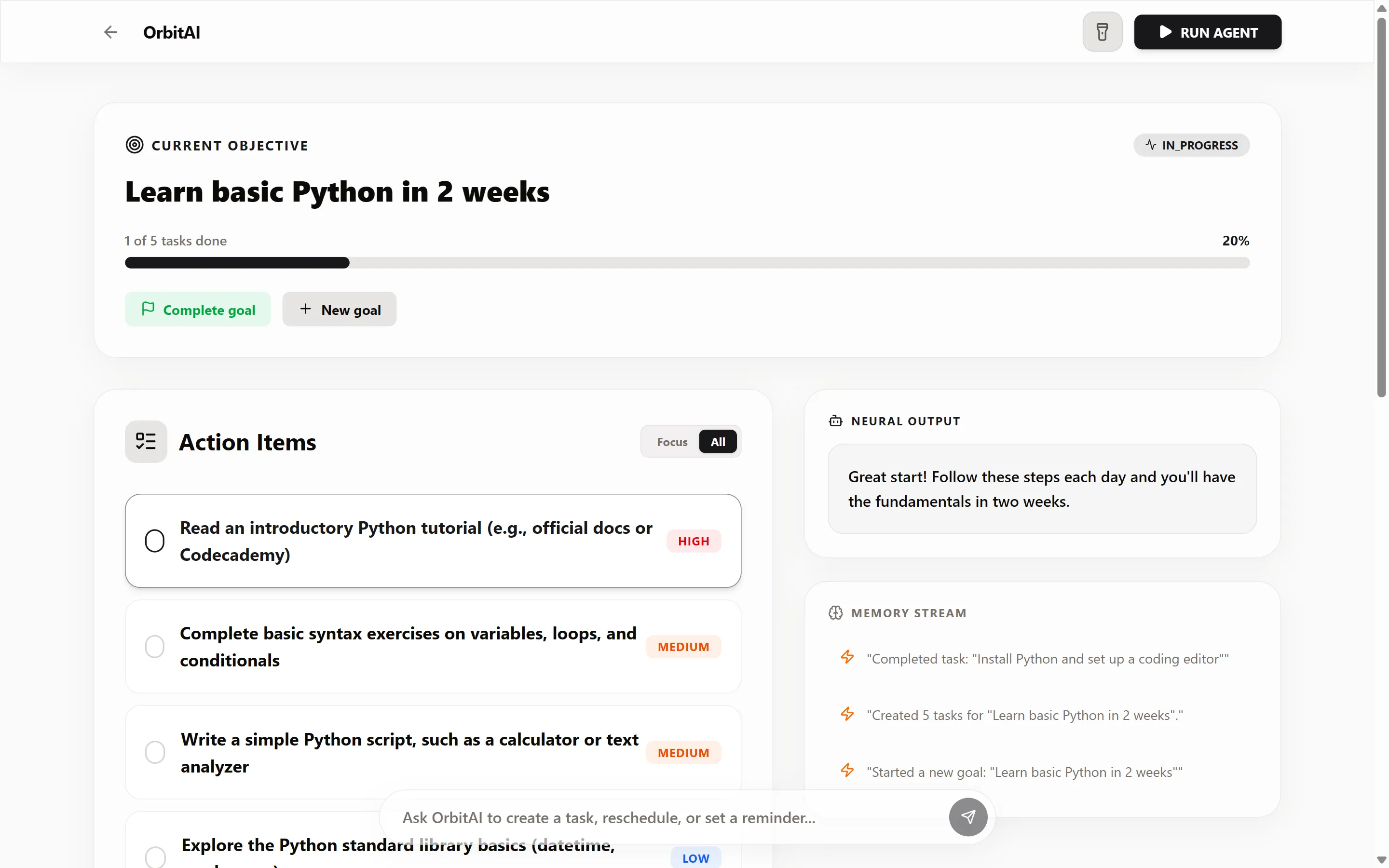
- Turns a goal into an AI-written task list with priorities.
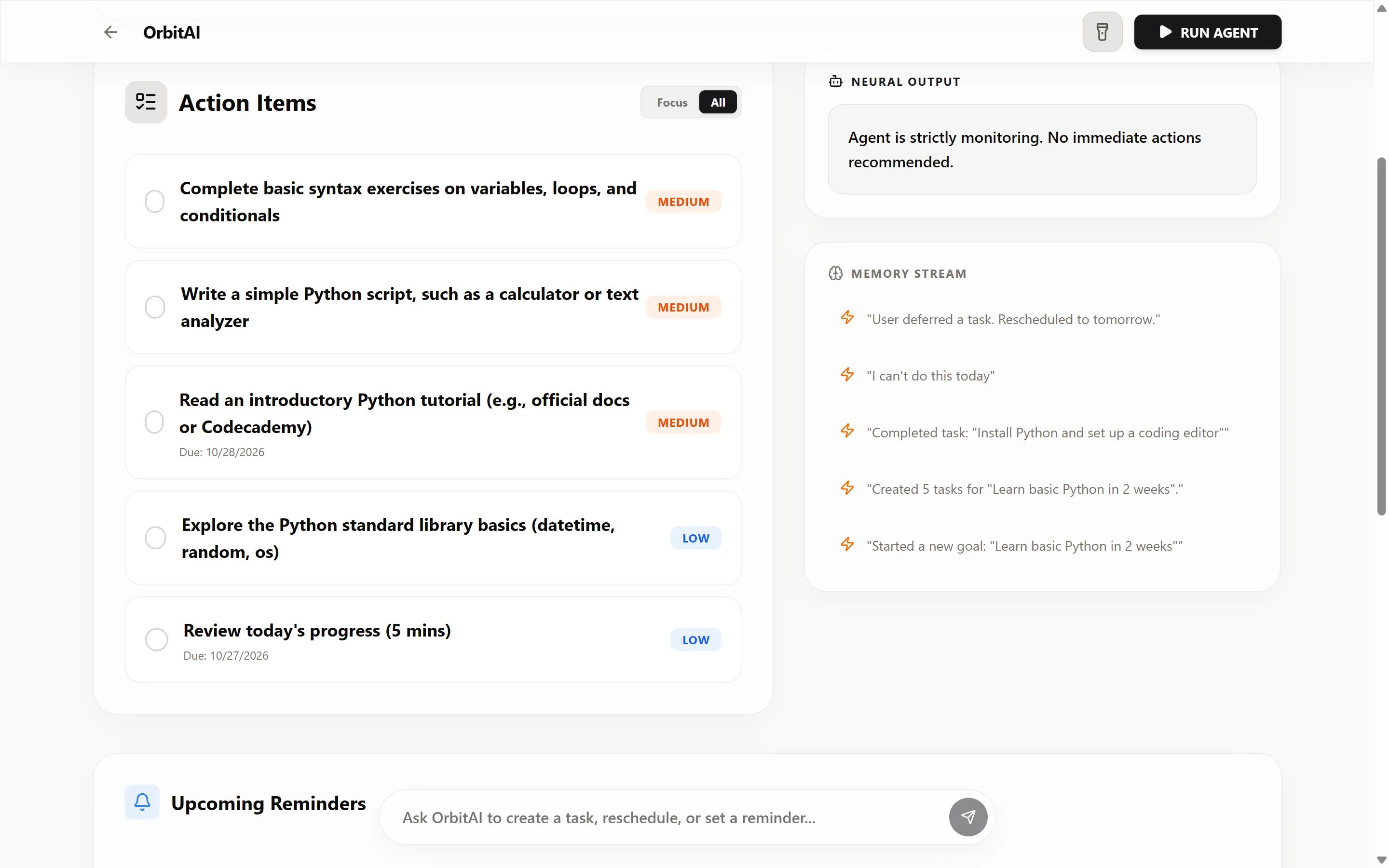
- On each run, the agent chooses one action: suggest the next task, add tasks, reschedule a hard task (putting a small 5-minute task in its place), set a reminder, ask you a question, or just reply.
- Refuses requests that are off-topic, such as asking it to write code.
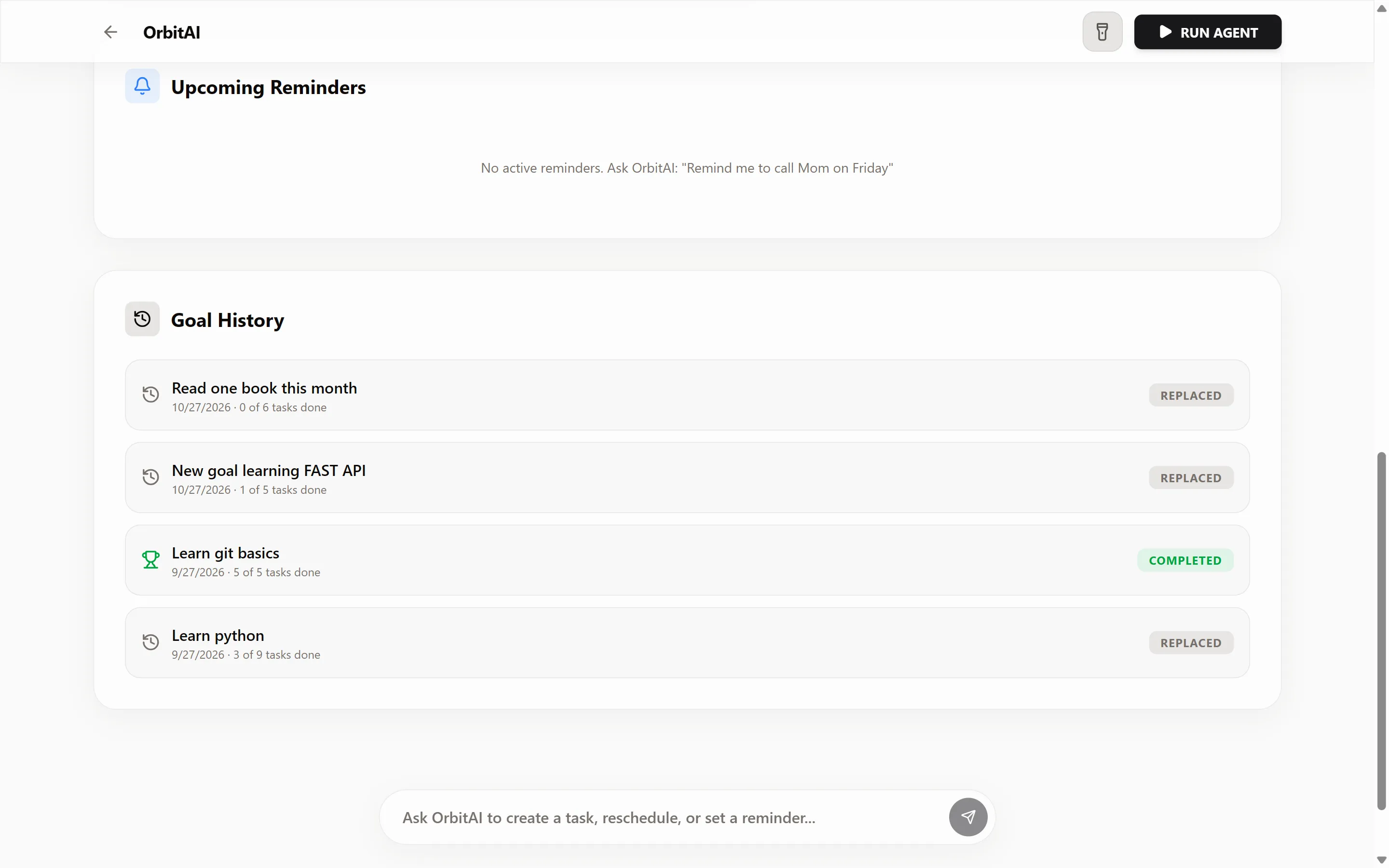
- Shows a progress bar, completes the goal when the last task is done, and keeps a history of finished and replaced goals.
- Keeps a short record of the agent’s recent actions, and shows upcoming reminders.
- Sign-up with email confirmation; light and dark themes.
How I kept the AI under control
- The agent can only pick from a fixed list of actions, and must answer in a strict format. It can’t do anything the software doesn’t know how to carry out.
- A smaller, faster model makes the frequent decisions, and a larger one writes task plans, where quality matters most. If one model fails, it falls back to the other, then to Gemini.
- Ticking off a task doesn’t use the AI at all, so it’s instant and always works.
If you’re thinking about AI for your business, this is the approach I’d bring: the AI works inside limits the software sets, not the other way round.
What went wrong, and what I did about it
I showed the first version to friends and college professors. They suggested a progress bar, fixing errors on repeated prompts, and a way to start a new goal after finishing one. My first attempt at those changes broke the app, and with the deadline close I rolled back to the working version.
In September 2026 I came back to it with a full security audit and upgrade:
- The cause of the earlier break. The code assumed a user has exactly one open goal, but nothing could end a goal, so starting a new one created a second open goal and the app failed. Goals now record when and how they ended, and the database refuses a second open goal.
- A security check I ran found the database open to anyone. I switched on access rules for every table, made every request prove who is logged in, and protected the scheduled job with a secret. Then I tested it: a stranger’s request gets nothing, and fake requests are rejected.
- The live site wasn’t updating. The hosting was holding new versions back instead of publishing them, probably since a rollback in January. I found this during testing and fixed it.
Where it stands
On 27 September 2026, all six checks passed on the live app: a stranger’s read returned nothing, unauthorised requests were rejected, the progress bar and task ticking worked, the agent replied, a new goal saved the old one as “replaced”, and finishing the last task completed the goal.
It has no user numbers, and I don’t claim any.
What’s next
- Reminder emails don’t send yet. The free hosting plan blocks the usual email method, so this needs a different email service.
- The link in the email still points to a local test address.
- No password reset page, and no editing or deleting tasks by hand yet.
- No automated tests yet.
How the work was split
- First version (January 2026): I described what I wanted, used ChatGPT to generate the code, then tested and assembled the app.
- September 2026 upgrade: I set the requirements (switching to Groq from Gemini, which model does which job, goal history, the progress bar) and made the decisions. I used Claude to audit the code, design the fixes and write the changes, and applied them with Claude Code. I configured the hosting and database myself, and ran all the tests.
Built with: Next.js, TypeScript, Tailwind CSS, Node.js, Express, Supabase (database and login), Groq (gpt-oss models), Google Gemini as backup, Vercel, Render.
Next: See all my work